For the announcement of the price band and the bid offer period, working day means all days, excluding all Saturdays, Sundays and public holidays on which commercial banks in Mumbai are open for business. The price band may move up or down to the extent of 20 per cent of the floor price and the cap price is revised accordingly. The price band and the minimum bid lot of an initial public offer ( IPO ) is decided by the promoters or selling shareholders of a company in consultation with the book running lead managers (BRLMs). It is advertised in widely circulated English and Hindi national newspapers, at least two working days prior to the offer opening date, with the relevant financial ratios calculated at the floor price and cap price and are made available to the stock exchanges for uploading on their websites. For the announcement of the price band and the bid offer period, working day means all days, excluding all Saturdays, Sundays and public holidays on whic...
Daily operations of BSE will continue as usual, said CEO Ashish Chauhan while backing PM Modi's decision of a nationwide lockdown.
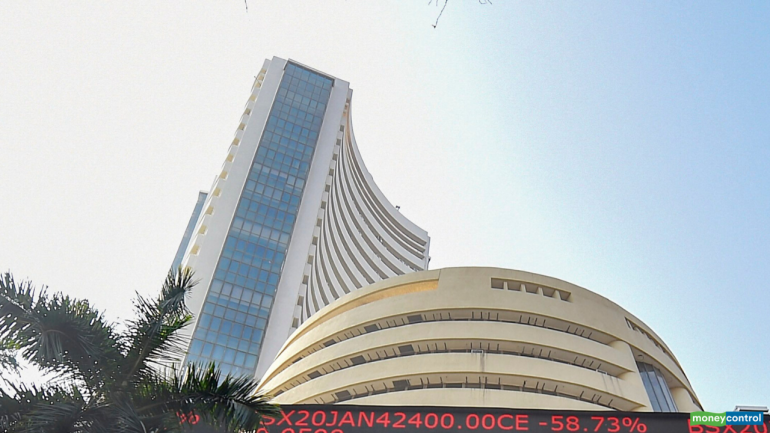
Prime Minister Narendra Modi on March 24 announced a lockdown in the entire country starting midnight from Tuesday for the next 21 days, but stock market operations will continue, as usual, Ashish Chauhan, CEO, BSE said in a tweet.
Backing the prime minister's decision on the lockdown through a tweet, Chauhan said: “The entire country is with you to save India’s future. We will do the 3 weeks nationwide lockdown ourselves."
In another tweet, he said the daily operations of BSE will continue as usual putting speculation to rest on whether the market will function during the lockdown.
Indian markets bounced back on Tuesday after registering its worst day in absolute terms in previous trading sessions when both Sensex and Nifty50 fell by about 13 percent.
Let’s look at the final tally on D-Street – the S&P BSE Sensex rose 692 points to 26,674 while the Nifty50 gained 190 points to close at 7801 on Tuesday.
Reacting to the announcement, VK Vijayakumar, Chief Investment Strategist at Geojit Financial Services said: "Enforcement of the 21-day lockout of the nation will be a major challenge. Ensuring supplies to all households is not going to be easy, but has to be done. The temporary shock to the economy will be huge. But if we come out of this lockdown successfully, economic recovery can be sharp. The choice in this crisis is limited. That's why the PM said, if we don't do this 21-day lockdown, we will go back to 21 years. Effective practical enforcement of the lockdown will require massive support from the central govt including income support to poor households, forbearance on NPA classification, EMI repayment etc. This will come, as the FM said earlier in the AN, sooner than later."
Earlier in the day, the Finance Minister Nirmala Sitharaman might have disappointed those who were waiting for a stimulus package, but announced a slew of measures to support the economy, traders, businessmen, and the common man.
However, to calm the nerves of D-Street, Finance Minister categorically said that relief measures will come sooner than later, and the current announcements are also part of that plan. She further added that there is no need to impose a ‘financial emergency’ as was claimed by some reports.
Giving assurance to the market, FM assured investors and market participants said that the government is closely monitoring the situation.
Amid the measures initiated by the government most brokerage firms are operating at minimum capacity including BSE; hence, the business operations would continue as usual.
However, many market participants, as well as industry bodies, have spoken in favour of shutting down the exchanges to counter the volatility that has pushed both benchmark indices—the Sensex and the Nifty-- below crucial support levels.
The Association of National Exchanges Members of India (ANMI) on March 23 requested the capital market regulator SEBI to shut down exchanges if state governments do not declare broking and depository operations as essential services.
Closing down stock exchanges would be disastrous for markets, say experts as it would mean a complete loss of reputation and confidence from a global standpoint.
“These are unprecedented times. A real force majeure situation at hand. We at Angel Broking are addressing this with extreme caution. For us, the health and safety of our employees and other stakeholders is paramount,” Vineet Agrawal, Chief Financial Officer, Angel Broking Ltd told Moneycontrol.
“Since early last week, we have most of our employees working from home, with very few and extremely critical roles being managed onsite, strictly adhering to required health and safety measures. We have provided all required digital tools to our employees so they can continue working seamlessly even from home,” he said.
Employees are using teleconferencing and video conferencing apps for all communications. We have adequate business continuity procedures in place and operational to ensure uninterrupted continuity of business for our clients.
Nithin Kamath, Founder & CEO, Zerodha said that his entire 1200+ member team is working from home since March 12.
“Today we are fully digital and we've transitioned seamlessly without any hitches. Nothing changes for our clients, they have complete access to all our products and services and it is business as usual,” he said.

Comments
Post a Comment